
If your workdays are mentally heavy, dinner becomes the hardest meal of the day, not because it’s complicated, but because it shows up right when your energy is gone.
That’s exactly how this week felt for me.
Nothing special happened. No crisis. No chaos. Just long days, late meetings, and that familiar moment in the evening when you realize you’re tired of deciding things.
I didn’t want to cook every night. I didn’t want takeout either. And I definitely didn’t want to stand in the kitchen at 7 p.m. asking, “So… what should we eat?”
So I kept things very simple, on purpose.
The decision that made the whole week easier
This week, I decided to focus on dinner only.
Not breakfast. Not lunch. Just dinner.
In other weeks, I sometimes use lunch as the anchor meal. But this wasn’t one of those weeks. Dinner was the one that kept creeping into my head during the day, so that’s where I put my planning effort.
And I added one more rule: every time I cooked, it had to cover at least two dinners.
No clever leftover strategies. No mixing dinner into next day’s lunch. Just: cook once, eat dinner twice.
That’s it.
A quick word about breakfast and lunch
I didn’t ignore them, I just didn’t give them attention.
On busy weeks, I keep breakfast and lunch repetitive on purpose. Familiar foods, no decisions, no evening prep. They exist in the background and do their job.
Dinner is where things usually fall apart. So that’s where I stepped in.
How I thought about the week
Instead of planning every day, I planned 4 cooking moments.
- One on Sunday, when energy was still decent.
- One mid-week, to carry me through the hardest days.
- And two very fast options for the end of the week, when motivation is usually gone.
That alone removed a lot of pressure.
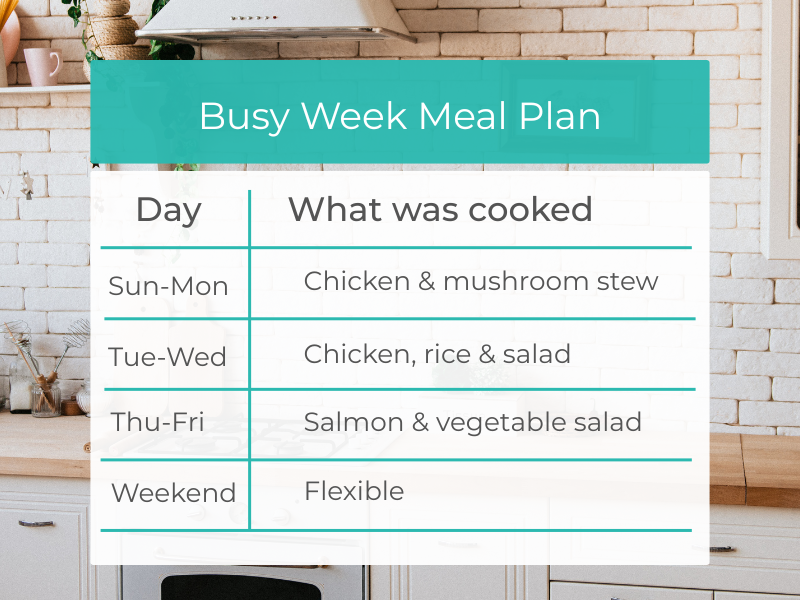
Sunday: setting up the week without overthinking it
On Sunday afternoon, I cooked a chicken and mushroom stew.
It wasn’t a recipe I had to watch closely. I chopped a few vegetables, added the chicken, put everything in the pan, boiled pasta and let it cook slowly while I did other things.
That one dish solved two dinners.
- On Sunday evening, we had it with pasta.
- On Monday, I used the same stew but made a quick polenta instead.
Same food. Different plate.
And most importantly, Monday dinner was already decided before Monday even started.
That alone made Sunday cooking feel worth it.
Tuesday: the kind of meal you don’t have to think about
By Tuesday, I knew the week was going to feel heavier, so I didn’t leave cooking for the evening.
I prepped in the morning, before work, when my brain was still working.
Dinner was grilled chicken breast with rice and a simple salad. Nothing exciting, but exactly what I needed. It cooked fast, and it didn’t feel like a project.
That one cook covered both Tuesday and Wednesday dinners.
On Wednesday evening, after a long day, I didn’t “cook.” I reheated the chicken, made another quick salad, and dinner was done.
No decisions. No debate.
Thursday and Friday: don’t make it harder than it needs to be
By Thursday, I’m usually running low on patience, so I planned something that couldn’t go wrong.
Salmon in the oven and a big vegetable salad.
The vegetables took some chopping, but the salmon cooked on its own, and cleanup was minimal. It was fast enough that repeating it didn’t feel annoying.
So on Friday, I made the same thing again.
No guilt about eating the same dinner twice. At that point in the week, ease mattered more than variety.
If you want to try this approach yourself, I put together a simple Busy Week Dinner Planner.
It helps you plan dinners for the week without cooking every day or overthinking meals.
What dinner felt like most evenings
We usually ate around 7:30–8:00 p.m.
Some evenings I could have cooked something more involved. Other evenings, absolutely not. And that’s the point.
Dinner didn’t depend on how I felt that day. It depended on decisions I’d already made earlier in the week — or earlier that morning.
What quietly disappeared this week
Because of this setup, a few things just… didn’t happen.
- There were no last-minute “what should we eat?” conversations.
- No delivery apps opened out of exhaustion.
- No complicated recipes that felt like work.
- And no nights where dinner happened way too late.
Why I’ll keep doing this
This wasn’t about eating perfectly or following a strict plan.
It was about protecting energy on a busy week.
Cooking three or four times, eating those dinners twice, and keeping things simple makes the week feel calmer and that’s a trade I’ll happily make again.
If your weeks feel similar, this is an easy place to start.