
You know that moment when it’s late, you’re tired, and the only thing standing between you and dinner is… nothing in the fridge that goes together? That’s exactly what weekly meal planning prevents.
Instead of stressing out at 7 p.m., you already know what’s for dinner because you decided it once, days ago.
Meal planning isn’t about complicated recipes or giving up flexibility. It’s about having a system, one that saves you time, money, and frustration. In this guide, I’ll walk you through the exact steps to create your first weekly plan, even if you’ve never tried it before.
Step 1: Why Weekly Meal Planning Matters for Beginners
Before you even think about food, pause and ask yourself why you’re doing this.
Some people meal plan to save money. When you shop with a list and use ingredients across multiple meals, you cut out impulse buys and reduce waste. Others do it to eat healthier; when you’ve already decided on balanced meals, it’s easier to skip the drive-through. And many people simply want peace of mind. No more daily debates about what to cook.
When you’re clear on your “why,” the habit has purpose. It feels less like another chore and more like an investment in your week.
Step 2: How to Create a Simple Meal Planning Framework
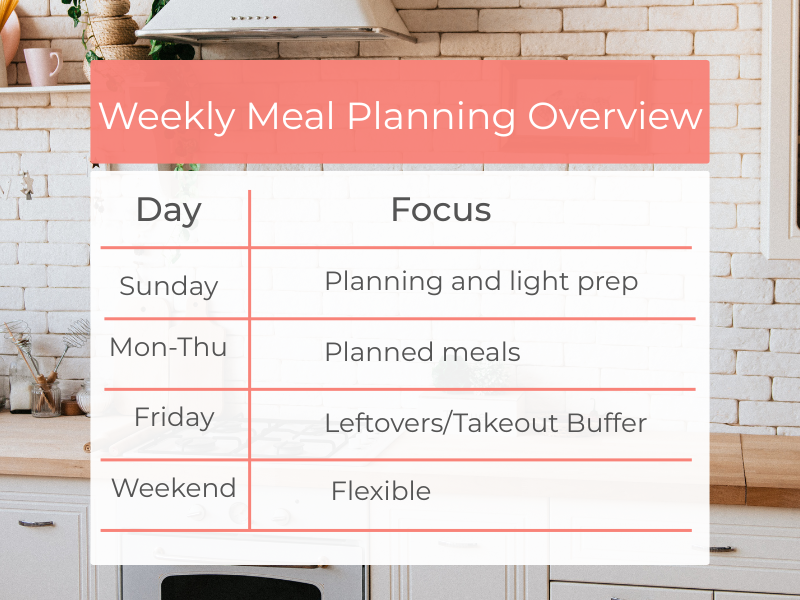
The biggest mistake beginners make is trying to plan seven completely different dinners. That sounds exciting, but it’s overwhelming in practice. The grocery list gets too long, prep time doubles, and half the ingredients end up wasted.
Instead, think in terms of a framework. Pick a handful of reliable meals you already like and rotate them through the week. This creates structure without demanding perfection.
Think of it like a wardrobe: you don’t wear a brand-new outfit every day, you mix and match core pieces. Meals work the same way. A few repeating options simplify everything: shopping, prep, and cooking.
The goal isn’t variety for variety’s sake, it’s building a system you can actually stick with.
Step 3: Weekly Meal Planning That Fits Your Schedule
Here’s where planning becomes personal. Your meal plan isn’t built in a vacuum, it needs to reflect the rhythm of your life.
Take five minutes to look at your calendar before you start. If Monday is packed with back-to-back calls, that’s not the day to schedule a complicated dinner. If Thursday is lighter, maybe that’s when you can spend a little longer in the kitchen. If you usually go out on Fridays, don’t plan a big home-cooked meal you’ll never make.
This step sounds obvious, but it’s where most beginners stumble. They create an “ideal week” on paper that doesn’t match reality. A realistic plan is one you’ll follow, and that’s the whole point.
Step 4: Build Balanced Meals in Your Weekly Plan
Meal planning isn’t about chasing perfect nutrition, but it works best when your plates are balanced. A simple way to think about it is in four groups:
- Proteins keep you full and help your body repair.
- Vegetables add fibers, color, and freshness.
- Carbohydrates give you energy to get through the day.
- Healthy fats keep meals satisfying and support long-term health.
You don’t have to measure or track every detail. Just aim to combine something from each category in most meals. Over time, this becomes instinctive. You’ll naturally start creating plates that look and feel balanced without even thinking about it.
Step 5: Turn Your Meal Plan Into a Weekly Shopping List
This is the bridge between your plan and reality. Without a proper list, the plan stays on paper and never reaches your plate.
The key is to keep your list clear and structured. Write down everything you need for the week, then group it by category: produce, proteins, pantry staples, dairy. That way, you’re not zig-zagging across the store, and you’re less likely to forget something.
One extra tip: before you finalize the list, check what you already have. Most people discover duplicate bags of rice, pasta, or spices sitting at the back of the cupboard. Shopping from your own kitchen first saves money and space.
Step 6: Meal Prep Tips for Weekly Meal Planning Success
This doesn’t mean cooking seven full meals in one day. Start small. Use an hour on Sunday to chop vegetables, cook a pot of grains, or prepare a couple of sauces. Even those small actions make weeknights feel lighter.
Think of it as “front-loading” your week. Every prep done on Sunday is one less task on a busy Tuesday night. And once you experience that relief, you’ll see why prep is such a game-changer.
Step 7: Smart Food Storage and Rotation for Meal Plans
The difference between success and frustration often comes down to storage. Cook once, eat twice, that’s the rule. Make extra portions on purpose, keep half for later, and label containers clearly.
Good storage doesn’t just save time. It keeps food fresh, reduces waste, and gives you options. Knowing you can pull a container out of the fridge instead of starting from scratch is one of the best feelings after a long day.
Rotation also matters. Use what you’ve prepped in the right order, so nothing spoils before you get to it. A little awareness here saves both money and stress.
Step 8: Keep Your First Weekly Meal Plan Simple
When you’re just getting started, it’s tempting to overdo it. You’ll want to try new recipes, add variety, and make the plan look impressive. Resist that urge.
The best beginner meal plans are simple. Use meals you already know how to make. Repeat them. Stick to a short shopping list. Once the habit feels comfortable, then you can start experimenting with variety.
Think of the first few weeks as practice rounds. The goal isn’t perfection, it’s consistency.
Step 9: Common Beginner Meal Planning Mistakes to Avoid
By now you’ve probably noticed a pattern: most problems with meal planning come from overcomplication. Too many different meals, no account for leftovers, or plans that ignore your actual schedule.
Another pitfall is forgetting snacks and small extras. If your plan only covers main meals, you’ll end up hungry and reaching for random options. Build those into your plan too.
The good news is these mistakes are easy to fix once you’re aware of them. Every week is a chance to adjust and improve.
Step 10: How to Improve Your Meal Plan Week by Week
Your first plan won’t be perfect, and that’s okay. Think of it as a draft. After the first week, reflect on what worked and what didn’t. Maybe you cooked too much of one dish or underestimated how many leftovers you’d have. Maybe you realized one prep session was enough instead of two.
Use those lessons to refine your next plan. Over time, the system starts to run almost automatically. You’ll spend less time planning and more time enjoying the benefits.
The Benefits of Weekly Meal Planning
When you bring all these steps together, you see the real magic of weekly meal planning. It’s not just about the food. It’s about what it gives back:
- Peace of mind, because the question “what’s for dinner?” is already answered.
- Healthier choices, because you’ve built balance into your plates.
- Time saved, because you prep once and cook smarter.
- Money saved, because you buy what you need and use it all.
It’s a small change with an outsized impact on daily life.
Ready to Start Your Own Weekly Meal Plan?
If you’ve been nodding along, the best next step is to try it. Don’t aim for a flawless plan. Just sit down, sketch out a few meals, and write your first shopping list.
Free Resource: The 7-Day Meal Plan
To make it easier, I’ve created a 7-Day Meal Plan Freebie. It includes a ready-made plan you can follow right away, plus a blank template so you can build your own version.
[Download it here and make your first week the easiest one yet.]
Once you’ve tried that, you’ll see how simple it can be.
Final Thoughts
Meal planning is just deciding once for the week instead of deciding every single day. That shift saves you stress, helps you eat better, and gives you time back.
Start with your “why.” Keep your first plan simple. Let the system grow as you do. In a few weeks, it will feel less like effort and more like freedom.